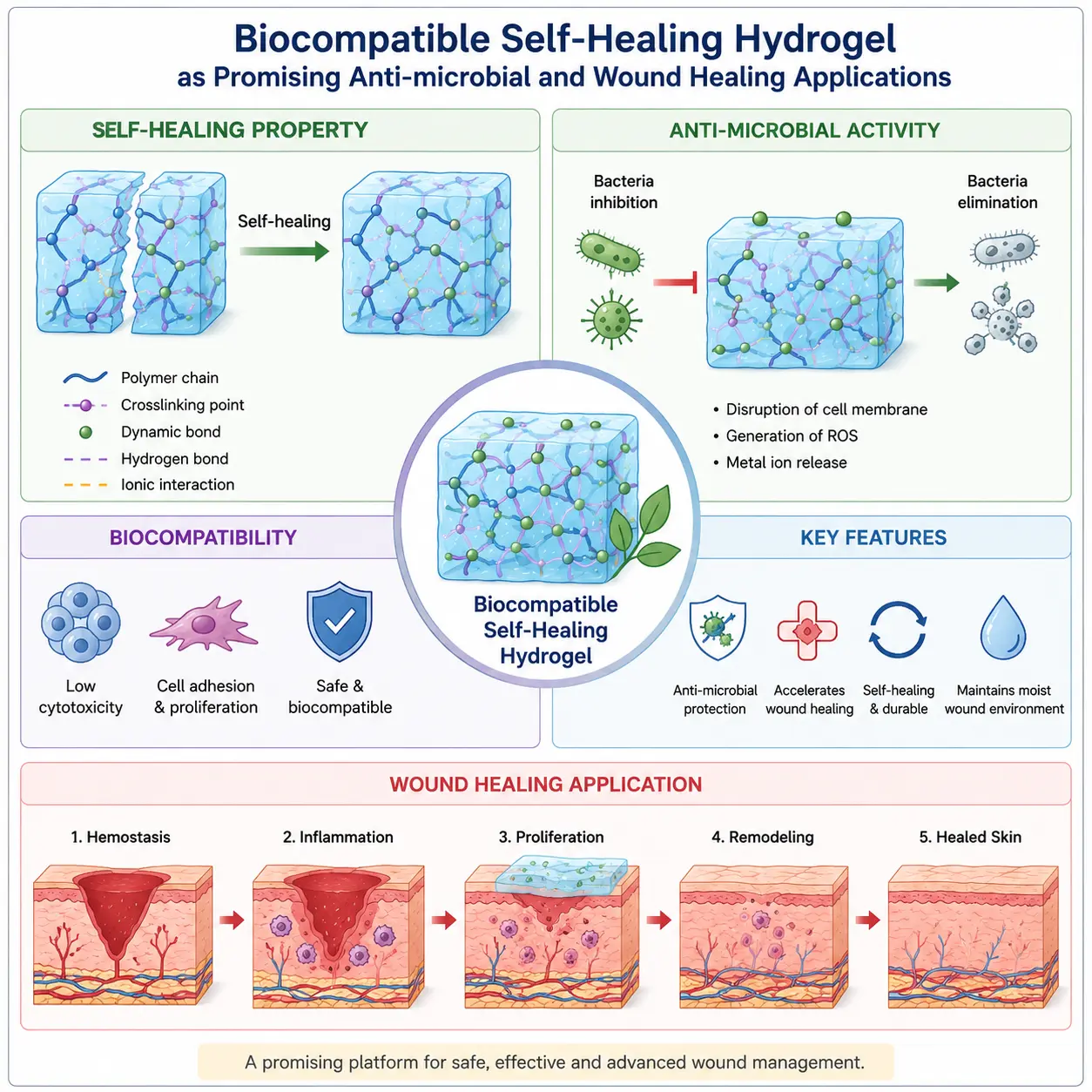
Biocompatible self-healing hydrogel as promising anti-microbial and wound healing applications
Chronic and acute wound management remains a significant clinical challenge due to the high risk of microbial infection, delayed tissue regeneration, and limitations of conventional wound dressings. This project aims to develop an advanced biocompatible self-healing hydrogel system with integrated antimicrobial functionality to address these challenges and improve therapeutic outcomes.
Project Visual
Smart Hydrogel
The proposed hydrogel is designed using biocompatible polymeric networks capable of autonomous self-repair through dynamic crosslinking mechanisms. This self-healing property enables the material to recover its structural integrity after mechanical damage, ensuring prolonged functionality and adaptability to dynamic wound environments. Such characteristics are particularly advantageous for maintaining continuous coverage and protection over irregular wound surfaces.
To enhance its clinical relevance, the hydrogel is engineered with inherent or incorporated antimicrobial agents to effectively inhibit the growth of pathogenic microorganisms. This reduces the risk of infection, a major barrier to efficient wound healing. Additionally, the hydrogel matrix is optimized to maintain a moist microenvironment, which is known to facilitate cell proliferation, migration, and extracellular matrix deposition which is a key processes in tissue regeneration.
The project also explores the physicochemical and biological properties of the hydrogel, including swelling behavior, mechanical strength, biodegradability, cytocompatibility, and antimicrobial efficacy. In vitro and, where applicable, in vivo evaluations are conducted to assess its performance in promoting wound closure and tissue repair.
In Summary
Overall, this research aims to provide a multifunctional wound dressing platform that combines self-healing capability, antimicrobial protection, and enhanced biocompatibility. The outcomes of this study are expected to contribute to the development of next-generation smart biomaterials for effective wound management and broader biomedical applications.