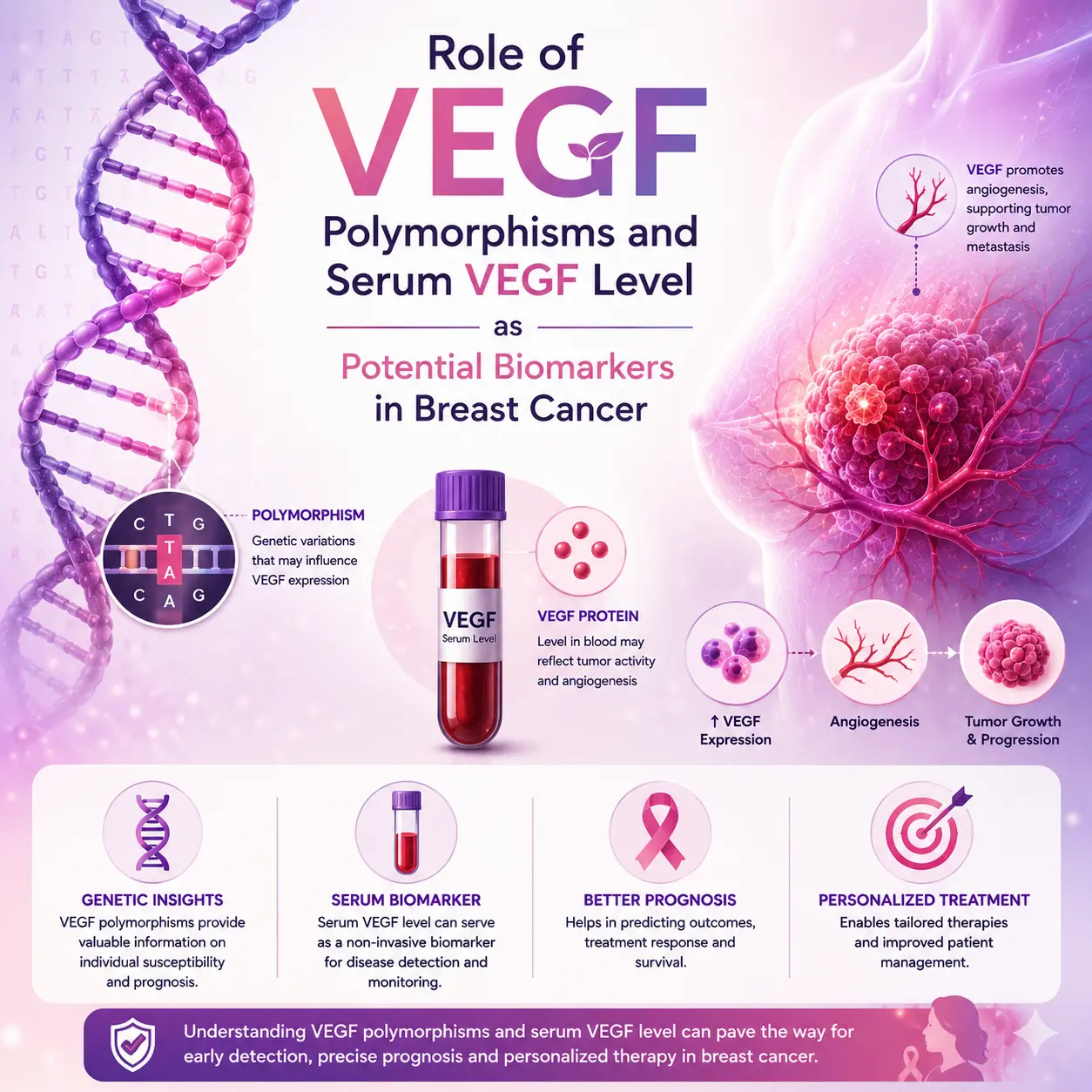
Role of VEGF Polymorphisms and Serum VEGF Level as Potential Biomarkers in Breast Cancer
Breast cancer remains one of the leading causes of cancer-related morbidity and mortality among women worldwide, including in Bangladesh, where late diagnosis and limited access to personalized treatment strategies pose significant challenges. Early detection and reliable prognostic markers are therefore critical for improving patient outcomes. This study investigates the role of vascular endothelial growth factor (VEGF) gene polymorphisms and circulating serum VEGF levels as potential biomarkers for breast cancer susceptibility and progression in the Bangladeshi population.
Project Visual
Gene Polymorphism
VEGF is a key regulator of angiogenesis, a fundamental process in tumor growth, invasion, and metastasis. Genetic variations (polymorphisms) in the VEGF gene may influence its expression and activity, thereby affecting an individual’s predisposition to cancer and disease severity. In parallel, elevated serum VEGF levels have been associated with enhanced tumor vascularization and poor clinical prognosis.
This case–control study is designed to evaluate the association between specific VEGF gene polymorphisms and breast cancer risk by comparing genotypic distributions between diagnosed patients and healthy controls. Additionally, quantitative analysis of serum VEGF levels is performed to assess its diagnostic and prognostic significance. The study further explores correlations between genetic variants, circulating VEGF concentrations, and clinicopathological parameters such as tumor stage, grade, and metastasis.
Molecular techniques, including polymerase chain reaction (PCR)-based genotyping and enzyme-linked immunosorbent assay (ELISA), are employed for accurate detection and quantification. Statistical analyses are conducted to determine the strength of associations, evaluate risk factors, and identify potential predictive markers.
In Summary
This research aims to establish VEGF polymorphisms and serum VEGF levels as minimally invasive, reliable biomarkers for early detection, risk assessment, and prognosis of breast cancer in the Bangladeshi population. The findings are expected to contribute to the advancement of precision medicine approaches and support the development of targeted therapeutic strategies tailored to population-specific genetic profiles.